

There are things we carry without realising—half-formed thoughts, unsent messages, quieter versions of ourselves we didn’t yet know how to protect. I’ve learned that silence can feel safe until it starts to cost more than it gives. The things that shaped me weren’t the ones I said, but the ones I held back.
Most of us meet that younger self again one day—the one who tried, who waited, who didn’t yet know how to take up space.
This story is part of that meeting.
What Stayed Unsaid
I only meant to clear some space.
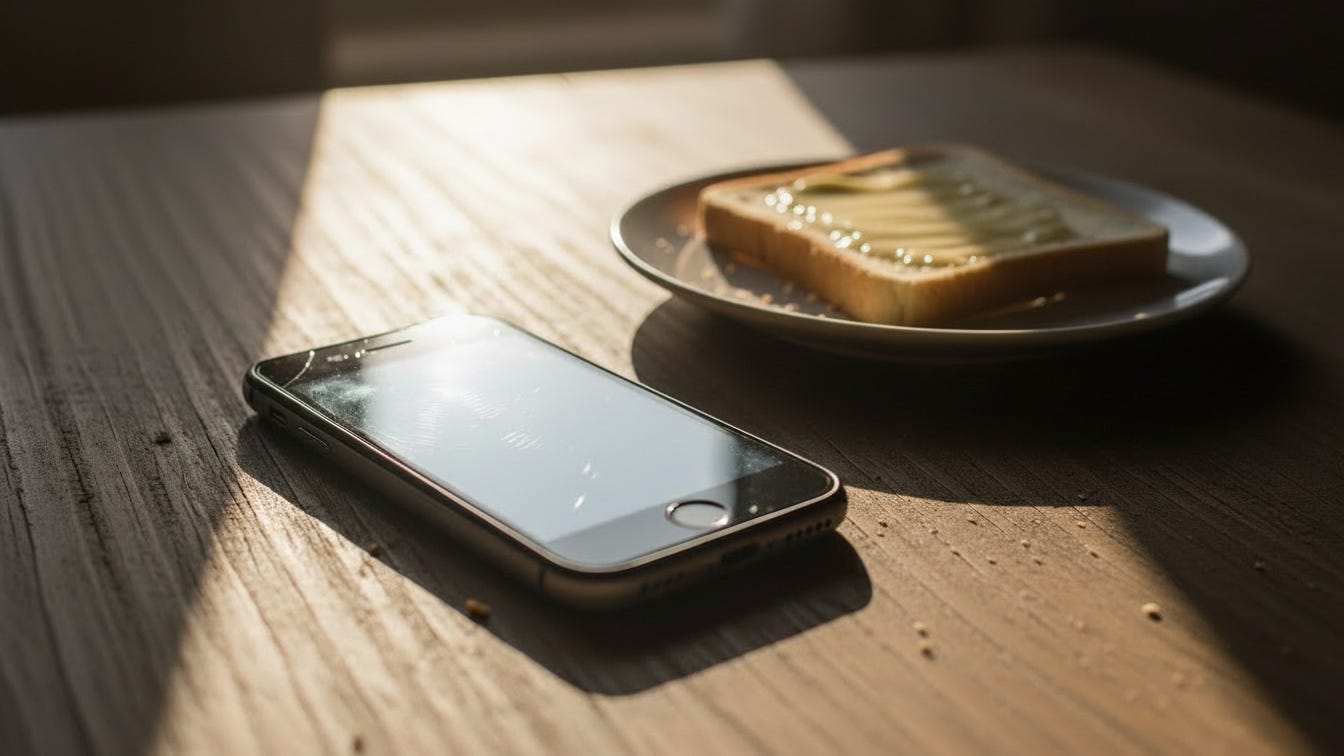
The phone was old enough to be annoying but not broken enough to replace. The battery died twice a day. The case was cracked. I’d already backed up what mattered: photos, contacts, the text threads I still dipped into sometimes, the way people once dipped into old boxes of letters.
Morning light fell across the kitchen table. The kettle hummed. My toast cooled untouched. It felt like any other small domestic task: wipe the screen, sign out, step out of another object I no longer needed.
I moved through apps I no longer used. A meditation timer from the time I thought breathing could solve everything. A calorie tracker with three weeks of effort. Trips I’d planned to places I hadn’t seen in years.
I tapped the email icon without thinking.
Inbox: empty. Sent: almost nothing. Trash: cleared.
At the bottom sat a folder I don’t remember noticing.
Drafts.
My thumb hovered over “remove account.” It pressed “Drafts” instead.
Thirty-seven messages.
I assumed they were junk—until I saw the “To” field.
Not names.
One name.
Her name.
I opened the earliest one.
The first drafts were almost shy.
Just checking in.
Hope your day’s okay.
No questions. No pressure.
I could hear that version of me—rewriting, softening, trying to make himself as unobtrusive as possible.
A few more in that first month:
Let me know if you need anything.
No rush.
I’m here.
She was carrying more than she ever said. Work. Family. Old hurts that surfaced in pauses she let sit too long. When she went quiet, I rushed in—full of reassurances no one asked for.
I remembered sitting at this same table, screen glowing in the dark, debating whether a single sentence might make things better or worse. Her silence always weighed more than the words that caused it.
I typed:
Did I do something wrong?
Held the question.
Deleted it.
The messages in the middle were longer, careful around their own edges.
I’m sorry if I upset you earlier.
I didn’t mean to make things harder.
It’s fine if you’re tired.
I scrolled further. My thumb slowed.
The cancelled plans. The way she said she felt “smothered” because I’d asked how she was twice. The morning she said, in that flat voice she used when she was done with the conversation but not the argument, that she had to manage my emotions along with her own.
One draft connected to a specific moment.
I’ll give you some space.
Message if you want to.
Her kitchen. An argument that began with something small and slid into the familiar places. My hands still wet from washing dishes. The plate she’d left on the counter, untouched. Thinking that if I could find the right words, something might ease.
Instead I went home and wrote that message.
Promising space.
Promising to need less.
To be less.
I never sent it.
But I saved it, apparently.
I scrolled.
One draft made me put the phone down.
It was written near the end—months before we officially split, weeks after the night I stood outside her building watching the light in her window go off and on while I waited for a message that never came.
No subject line.
Just this:
I don’t know how to be around you lately.
I feel like I’m getting smaller.
I’m trying so hard not to get it wrong.
I miss feeling like myself.
I don’t know how to say any of this out loud.
I read it twice. Then again.
Back then I called what I was doing patience. Loyalty. Giving her time to heal.
I pushed the phone away.
The kitchen stayed exactly as it was—kettle cooling, light shifting, the world unmoved by whatever truth I had almost spoken years ago.
I rinsed my mug and opened the back door. The day smelled of cut grass and someone’s laundry detergent. A dog barked two gardens over.
People say what they mean now.
When I say no, nothing collapses.
The ground stays where it is.
And still, his voice lingered in mine—not regret, just recognition.
We didn’t end with a single moment.
No slammed door.
No final speech.
We drifted.
Messages stretched into days.
Days into weeks.
One morning I realised I hadn’t checked my phone before getting out of bed.
By the time we finally said the words—“This isn’t working”—most of the leaving had already happened in silence.
I scrolled back to the bottom.
The last draft waited there.
No subject line.
Three days before everything ended.
I didn’t remember writing anything then. I’d been moving through days without really feeling any of them.
I tapped it.
I can’t keep trading pieces of myself to keep the peace between us.
I hope you find what you’re looking for.
I need to find me.
Three lines.
Plain.
Steady.
I read them aloud.
The words felt unfamiliar in my mouth but undeniably mine.
We hadn’t said anything like this during the breakup—just soft apologies and vague negotiations. We never named the cost.
But here it was, on an old screen: proof that somewhere in all that fog, a part of me had already chosen a different life.
I just hadn’t learned how to live it yet.
The delete icon waited in the corner. One tap would clear all of it. Years of swallowed sentences erased in a second.
My thumb hovered. Odd to hesitate over old texts. Just pixels. Autosaves. Versions of me I thought I’d outgrown.
But he wasn’t gone.
He lived in certain reactions—when someone went quiet, when a message began with “We need to talk,” when I caught myself cushioning a simple truth so it wouldn’t land too hard.
I didn’t owe the drafts reverence.
But I owed the man who wrote them a little respect.
“Okay,” I said quietly.
Mostly to him.
I pressed delete.
The folder emptied.
Nothing dramatic happened.
Something in me shifted anyway—small but definite, like unclenching a fist I hadn’t realised was tight.
I signed out of the account. Removed it from the phone. Another doorway to an old life closing without ceremony.
Before shutting the phone off, I opened the messaging app I use now.
No half-finished conversations.
No dread at the top of the screen.
Just ordinary names.
Ordinary lives.
I started a new message. Addressed it to myself.
The screen stayed blank.
Still here.
Still learning.
I won’t abandon you again.
I sent it.
A second later my phone buzzed—my own words arriving as if from someone else.
I read them once more, then set the phone facedown. Not to hide it.
Just because I didn’t need it right then.
Outside, the light had shifted.
The day kept going.
I stood, picked up my keys, and stepped into it—not new, but more honestly arranged.
Not easier.
Not simpler.
Just mine.
Oh my. Awful early in the morning for so many glimpses of my life but I’m thankful you wrote them.
What a beautiful essay, Robert. It’s truly a work of art—moving, relevant, and deeply felt. Thank you for so generously sharing it with us, your grateful readers. And friends.