

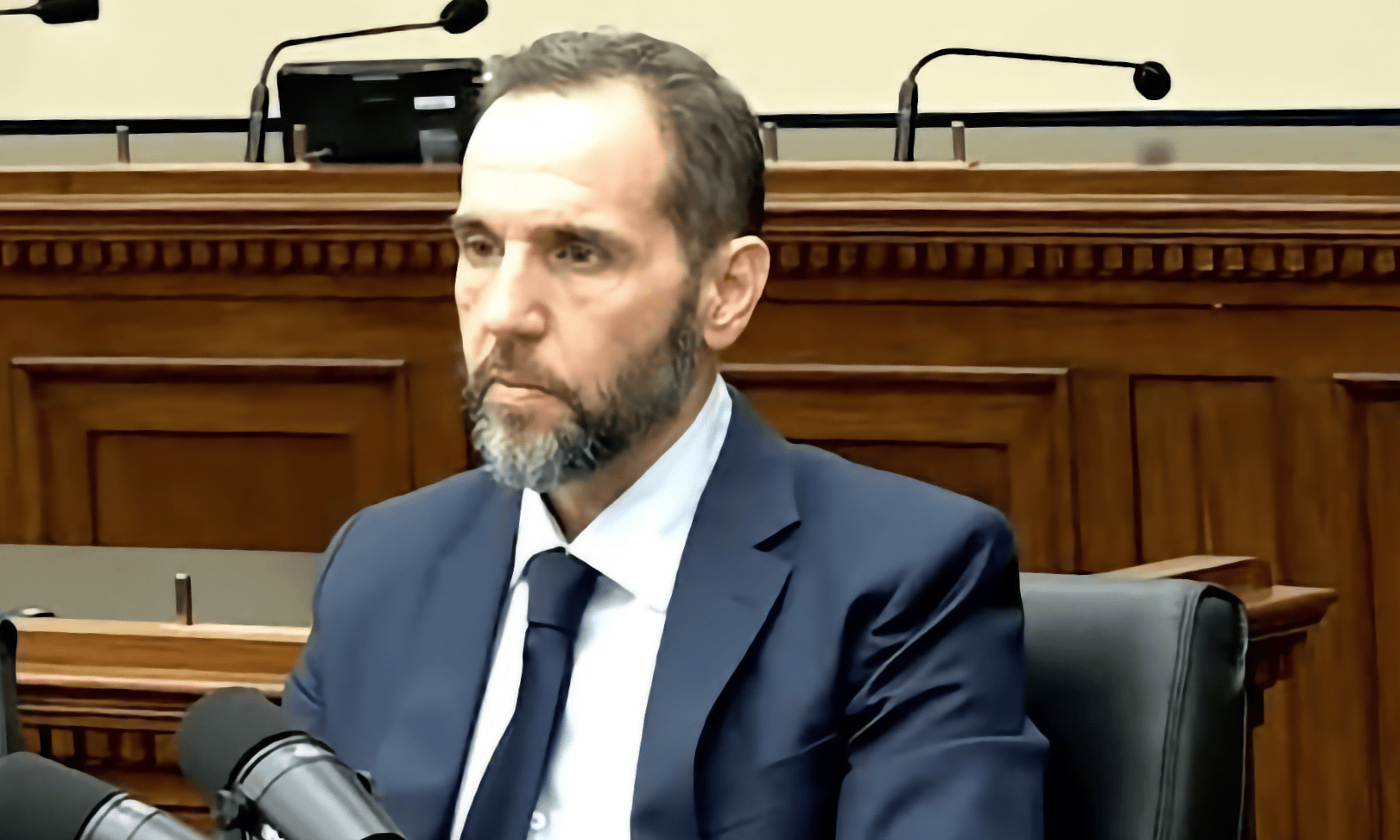
It began with a series of decisions that were all defensible on their own. A hearing that would not be public. A volume that would not be released. A transcript made available at the far edge of the calendar, when the year was emptying out and attention had already moved on. None of this required secrecy. Nothing was hidden. What was withheld was shape. What was denied were the conditions under which a story normally gathers—voice, sequence, audience. The material entered the public domain quietly, in pieces, without announcement, testing whether something can be known without ever quite being heard.
The refusal to hold the hearing in public was framed as prudence. The decision not to release the second volume was framed as restraint. The timing of the transcript’s release required no framing at all. Each choice could be explained, if explanation were the goal. Taken together, they produced something harder to name: a record without ceremony, context, or a moment of arrival. There was no scene in which it could be received, only a document left where documents are left, waiting to be noticed or not.
Attention is not neutral. It gathers where it is invited, where there is sound, sequence, and a sense that something is happening now. Remove those conditions and attention thins on its own. What remains is not absence but dispersion: material available without insistence, accessible without urgency. The record does not announce itself. It does not interrupt. It remains in the open, requiring from anyone who encounters it the willingness to hold pieces together without being told that this is what is happening.
Publicness is often treated as a switch—on or off, transparent or concealed. What this sequence suggests instead is a gradient. Things can be technically public while remaining socially inert. The work is done not by locking doors but by arranging the room so that no one stays very long, so that nothing gathers enough weight to demand response.
There is an expectation, learned over time, that important things will announce themselves—that they will arrive marked, accompanied by language that signals their weight. When this doesn’t happen, the instinct is to assume there is nothing there yet, or that something has failed to materialize. It becomes easier to wait for the moment of clarity than to sit with what has already appeared, resisting emphasis.
This way of handling information produces a particular safety. Nothing has to be denied. Nothing has to be defended if it never quite takes shape. The record can exist without friction, available without consequence, its presence registered only as potential—something that might matter later, if and when it is gathered, named, given a voice. Until then, it remains untroubling, not because it is empty, but because it has not been permitted to cohere.
There is a parallel restraint visible in Jack Smith himself. Across roles and jurisdictions, his public presence has been marked by adherence rather than declaration—process over pronouncement, record over performance. He does not explain the work as it unfolds or adjust it for reception. He does not respond to whether it is heard. The work proceeds to standard and stops where the record stops.
At a certain point, waiting ceases to feel provisional. It becomes a posture. Not an act of patience, but a habit of deferral that asks very little of anyone involved. The record remains where it is, intact and untouched, while the world adjusts around its non-arrival. Nothing has been resolved, but nothing presses. The absence of insistence begins to resemble resolution, even as the conditions that produced it remain fully in place.
By the time this posture settles, the distinction between absence and presence has shifted. The material is no longer missing. It is there—available, legible, unchanged by the quiet that surrounded its arrival. What has been withheld is not access but momentum. The record does not need to be uncovered. It needs to be encountered, and there is no mechanism left to ensure that this happens.
If this posture feels familiar, it is because it does not originate here. Smith has occupied similar roles before, under different pressures, without altering the shape of his presence. The work is conducted to remit, not to moment. The record is assembled without regard for whether it will be carried forward intact, contested, or ignored. Whatever meaning emerges does so elsewhere, or not at all. His involvement ends where the record ends.
There is a temptation, at this point, to mistake this condition for failure. To assume that because the record did not arrive loudly, it has not arrived at all. But nothing has been erased. Nothing has been altered. What has changed is the burden of recognition. It no longer belongs to process, timing, or any formal moment of disclosure. It rests, unevenly and without instruction, wherever attention is willing to pause long enough for the material to take shape.
This is not a crisis of information. It is a condition of reception. The mechanisms that once gathered attention around disclosure have thinned to the point where they no longer function reliably, even when nothing is actively concealed. What remains is a quieter test: whether something can be known without being carried, whether a record can matter without being ushered into consequence. The answer, whatever it is, does not announce itself.
It is possible to stand inside this recognition without drawing a conclusion from it. To note that something has entered the record without assuming it will be taken up, argued over, or absorbed into a shared account. The conditions that kept the story from cohering have not lifted simply because the material is now present. They persist, quietly, shaping what happens next by declining to shape it at all.
Nothing further needs to be made visible for this to be true. The record is present. The conditions that prevented it from arriving as a story remain intact. Between those two facts, a posture becomes possible—one that does not wait to be told what matters, and does not insist that what matters must announce itself. The rest is quiet, and unassisted.