

Tea, Interrupted
I’ve recently come to the slightly embarrassing realization that I have been practising a form of time management for most of my adult life without knowing its name, its rules, or—crucially—that anyone else thought it needed improving.
It is not sophisticated. It does not involve timers, apps, or coloured blocks on a calendar. It is driven almost entirely by my need for tea.
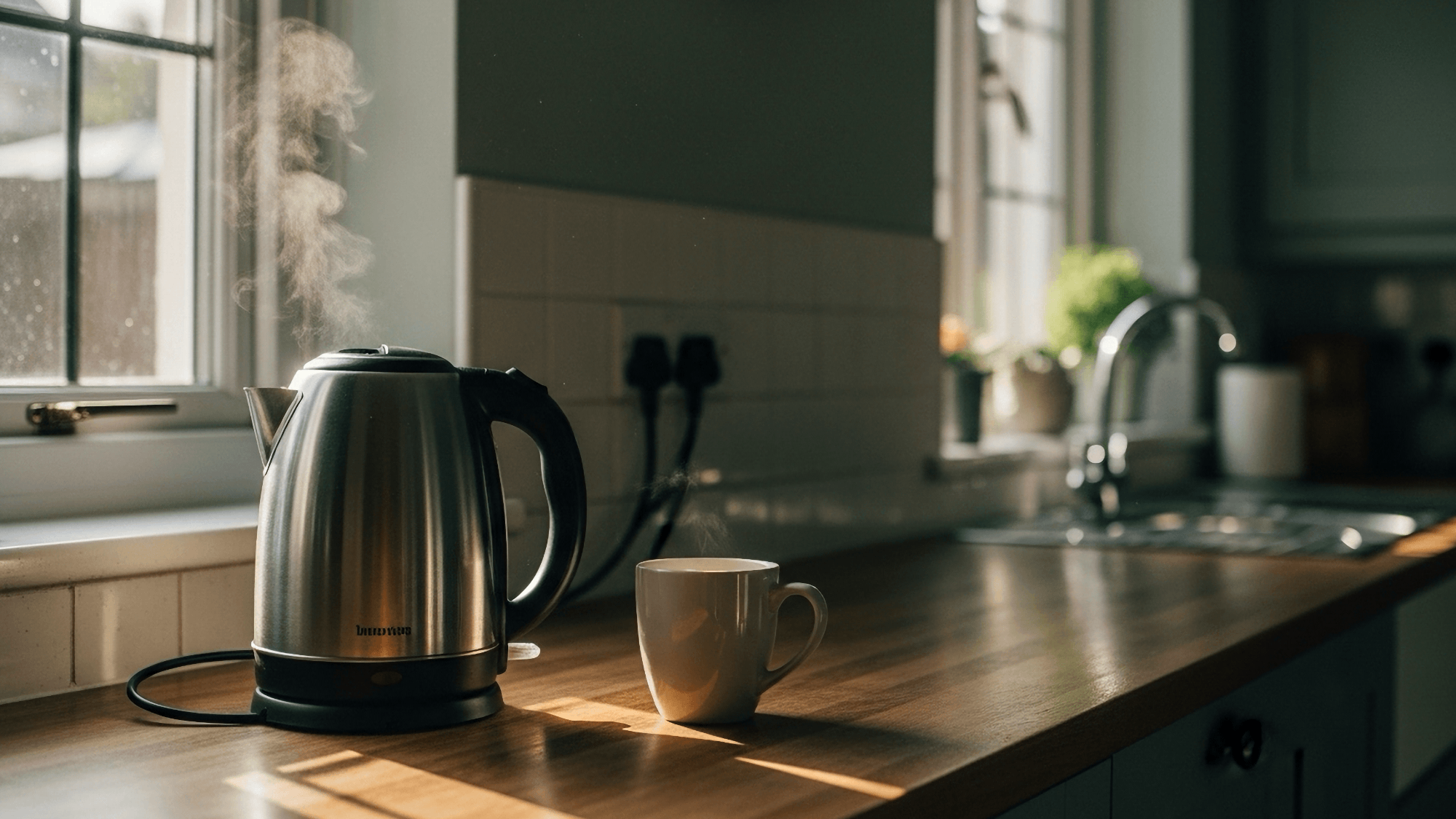
This is not a metaphor. The kettle, it turns out, has been running my day for years.
I work until the tea runs out, or until I realise I should probably make more. I stand up not because I’ve reached a natural stopping point, but because the absence of a mug has begun to register as a problem. The break is not earned. It is assumed. The pause arrives not as a reward for focus, but as a bodily correction—heat, weight, familiarity returning to the hands.
Only recently did I learn that there is an internationally recognised system for doing something broadly similar, involving tomatoes, intervals, and an admirable amount of earnestness. People set alarms. They track cycles. They congratulate themselves for resting at the correct time.
I find this mildly impressive, and slightly exhausting.
What struck me wasn’t that my way was better. It was that I had never thought of it as a way at all. It had simply been there—unremarked, unoptimised—like weather, or posture, or the particular sound the kettle makes just before it boils.
The trouble, of course, is that rituals only work when they are allowed to interrupt you.
Somewhere along the way, I started overriding the kettle. I would notice the thought—I should make tea—and file it under later. Not because I didn’t want it, but because I was in the middle of something. Or nearly finished. Or just about to make progress.
Nothing dramatic happened. I didn’t burn out or collapse. I simply stayed seated longer than I meant to, hands cooling around an empty mug, attention thinning in a way that was easy to miss and hard to name. The pause still existed in theory. In practice, it had been deferred.
What I hadn’t realised was that the ritual hadn’t failed. I had stepped outside it.
At some point, the pause began to require permission.
Not from anyone else, exactly. From the work itself. From the shape of the day as it quietly reorganised around completion. I would hear the kettle click off and register it as an interruption I might not be able to afford. Five more minutes. This paragraph first. Just finish the thought.
Tea, which had once arrived without negotiation, now waited to be justified.
What surprised me was how reasonable this felt. Sensible, even. As though stopping needed to be earned, while continuing did not. As though attention was something I owed the work, rather than something the work was borrowing from me.
These days, the kettle still clicks off in the background. I hear it. I don’t always move. Sometimes I finish the sentence I’m in. Sometimes I don’t. What has changed is not the ritual, but my awareness of when I step away from it—and the quiet cost of doing so. The kettle was never the point. It was simply a way the day used to interrupt me, without asking.
Subscriptions are open.