

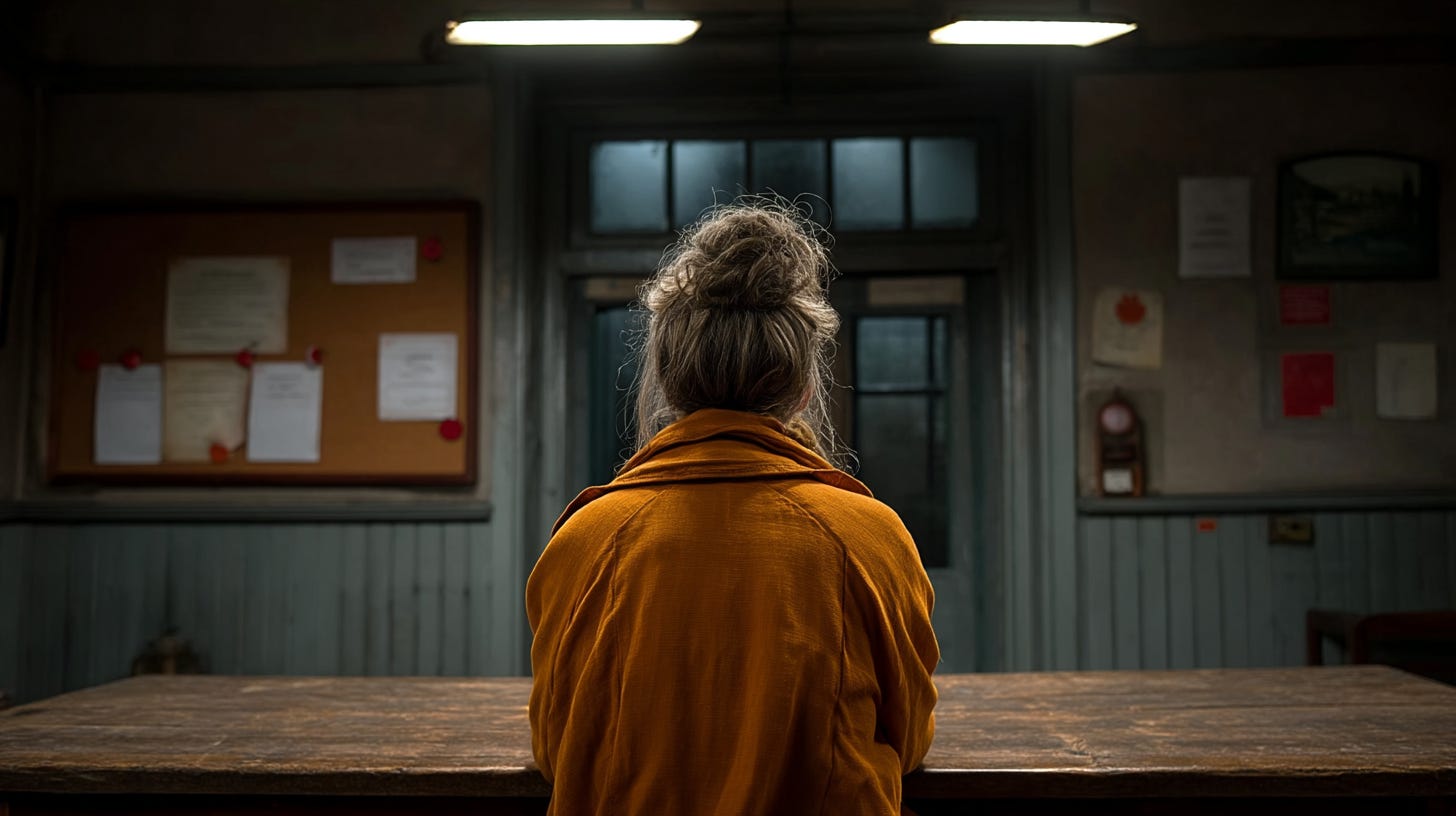
It began with a laminated notice pinned to the corkboard by the back door of the village hall, angled slightly left.
The corkboard was for rotas and cake lists, missing scarves and reminder slips that had outlived their usefulness. Notices that stayed too long were usually moved to the drawer beneath, or folded once and placed on the radiator where paper went to soften before being forgotten.
This one had been laminated.
Black type. Block capitals. A request framed as information. No crest, no date, no signature. Two blue pins held it in place, one higher than the other.
Maggie noticed it because it was not where notices usually went.
By mid-morning, someone had moved the lost-property tray to make room. The tray had never been full. Now it sat on the windowsill beside the fire extinguisher, leaving a faint crescent on the lino where it had stood.
Audrey Crenshaw stopped in front of the board, reading the notice twice.
“Well,” she said, after a moment. “That’s helpful.”
She adjusted the pin nearest the top, not enough to straighten it, then moved on.
Netta arrived late, coat still damp. She stood in front of the board with her bag over one shoulder and read the notice once. She did not adjust a pin. She did not step aside. She stood there until Dot came through and had to reach around her for the kettle.
“You’re blocking the board,” Dot said.
“I know,” Netta said, and moved.
By lunchtime, a second pin had appeared. Red. It sat lower than the others, holding nothing new in place. No one admitted to placing it. The laminate dulled where fingers had passed.
A woman who usually left her bag under the table brought it with her instead. Someone held the door open longer than necessary, then longer still. Enid repositioned her chair so that her back was to the board, then repositioned it again so that it wasn’t. She left it at an angle that served neither purpose.
A pair of gloves appeared on the radiator, placed flat, palms together. They were not from the lost-property tray.
Mavis arrived with the minutes from the previous meeting. She placed them on the table, glanced at the board, and placed a second copy on the radiator beside the gloves. She did not explain.
Maggie watched two women approach together. They stopped. One read the notice and stepped aside without comment. The other hesitated, glanced at Maggie, then at the floor. After a moment, she did the same.
Reginald came in from the back with soil on his boots. He paused in front of the board on his way to the kitchen.
“It’s not the correct size for that board,” he said, and moved on.
That afternoon, Dot brought biscuits. She set the plate on the table beneath the board, then moved it to the table by the window. Then moved it back. The plate ended up where it always went, but the route it took was different.
Someone had written a phone number on a scrap of paper and pinned it to the edge of the board, three inches from the notice. The scrap curled at the corners.
Lynn asked Audrey whether there was a process for removing notices from the board.
“There’s a process for everything,” Audrey said. She did not describe it.
By the following afternoon, the notice had faded slightly along its top edge. Sunlight reached it there first. The board around it showed the outline of older pins, marks of what had hung there before.
The red pin had not moved. Neither had the blue ones. But the notice itself seemed lower—not fallen, not adjusted. Just lower.
Enid stopped at the board on her way to the kitchen. She stood with her teacup in both hands, reading. She read it again. She turned to Maggie.
“It doesn’t say who put it there,” she said.
Maggie said nothing.
Enid looked at the board again. Then at her tea. Then she went to the kitchen.
When Lynn asked whether the notice was still up, Maggie said, “It hasn’t fallen.”
That evening, someone folded the bottom corner of the paper beneath the laminate. The crease held. It was the kind of fold that requires both hands—one to hold the laminate open, one to press the corner under. Someone had taken their time.
Netta walked past the board on her way out. She stopped, looked at the fold, and touched the crease with one finger. She did not unfold it. She did not straighten it. She pressed it once, firmly, and left.
The hall emptied. Chairs were stacked. The urn was unplugged. The lost-property tray remained on the windowsill. The biscuit plate was washed and returned to the cupboard. The gloves stayed on the radiator. The phone number scrap had curled further, its bottom edge now touching the laminate.
Maggie sat at the table by the window. Outside, the lane was dark. The streetlamp nearest the hall door had come on, throwing a thin bar of light across the corkboard through the glass panel. She could see the notice from where she sat. The red pin. The fold. The scrap beside it. The crescent on the lino where the tray had been.
She opened the grey notebook. She wrote the location, the object, the duration. She rested the pen across the fold.
The notice was visible through the glass. The red pin caught the lamplight.
She lifted the pen and closed the book instead.
The notice stayed up.