

Absent Without Leave
It began, as absences often do, with something overly tidy.
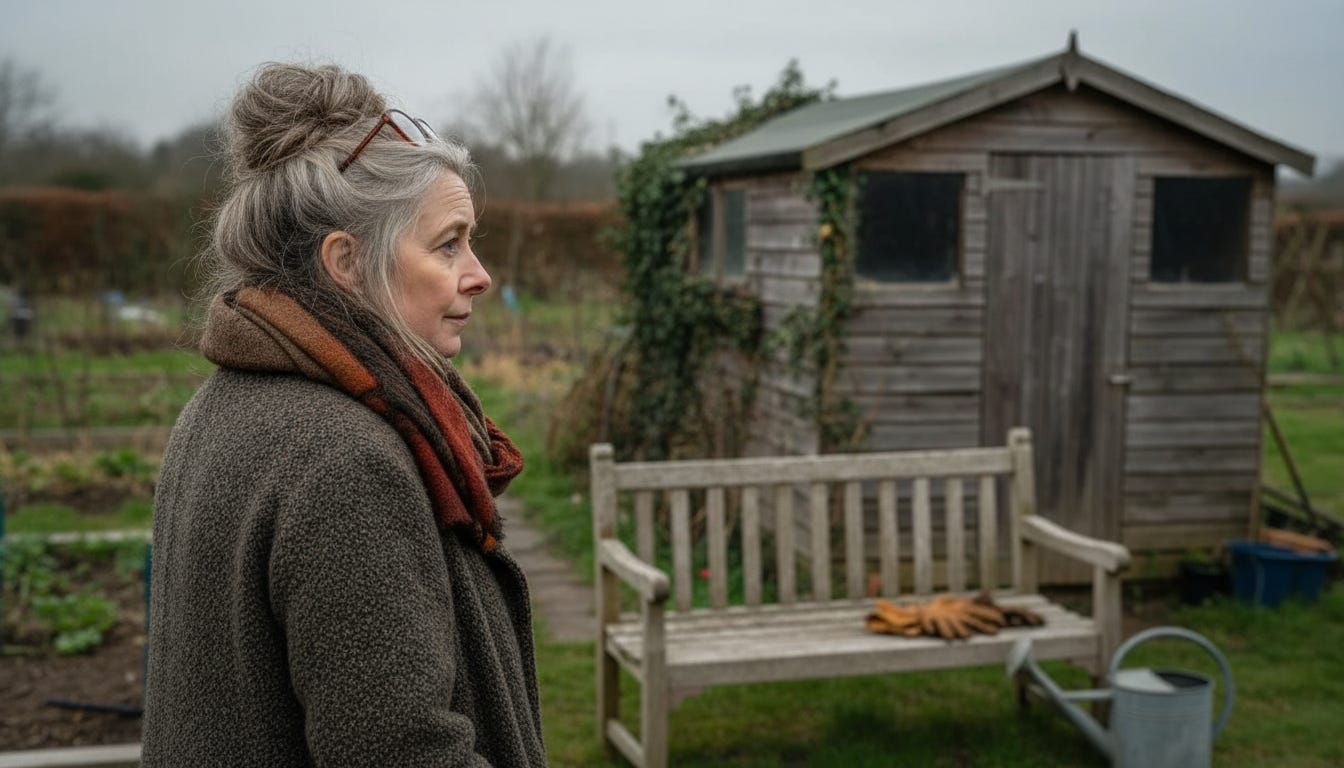
The compost scoop was washed and returned, handle aligned. The gloves—Reginald’s—lay folded on the bench, palms up. And the watering can stood empty, spout angled just so against the shed.
Maggie noticed it on Tuesday. The sky was grey, but holding. Audrey was inspecting the lavender bed like it had personally let her down.
“He’s never missed a rota day,” she declared, loud enough to startle a pigeon. “Not since the wheelbarrow incident. You remember that. Third Thursday in March.”
Maggie nodded. Let it settle.
“He say anything about being away?”
Audrey sniffed. “Only that he’d be pruning today. At nine. Which was two hours ago.”
She folded her arms like punctuation. “He’s not usually the flaky sort. Not openly.”
The bench stayed empty. The kettle at the shed went unboiled.
By Thursday, Audrey was drafting a note, just in case he’d had a fall—though it read more like a reprimand than a welfare check.
Maggie said nothing. She watered 88. Then 91. Just enough.
As she passed the bench, her hand hovered near the gloves—then withdrew.
Left them as they were.
On the way home, she passed Reginald’s gate.
No bin out. No post.
Just a single bootprint in the softened earth near the hedge.
Faint. Still visible.
Inside, she made tea. Didn’t drink it.
She opened the grey notebook.
Not to a new page. Just the inside cover.
Smythe-Harrington—written once, early. Before he earned his own casefile.
Back when she still recorded allies like rare birds.
Brief sightings. No promises.
Then she waited.
On Friday, a note appeared—not in her post or under her door, but tucked inside the allotment suggestion box, behind a flyer for Herbal Teas and the Perimenopausal Palate.
Folded once. No salutation.
Gone to Brighton.
Back Tuesday.
Don’t alert the Crenshaw.
— R.
She folded it.
Tapped it twice.
Slipped it into her pocket.
Brighton.
He’d mentioned it once—briefly—over ginger tea and the careful unwrapping of fig bars.
A former wife. Not spoken of since.
She didn’t mention the note.
On Monday, she passed the shed again.
Inside, the gloves were gone.
The scoop was clean.
The kettle hummed.
Reginald stood near the communal tap, rinsing out the shared watering can with quiet precision.
The spout caught the light briefly.
He aligned it with the paving stone.
One foot tapped—softly.
Not impatient.
“You overwatered,” he said mildly.
“You overwrote,” she replied, holding up the note.
“Brighton?”
He didn’t answer straight away.
Just lifted the can.
Emptied it slowly along the hedge.
“She’s there,” he said finally.
“We don’t talk much. Haven’t in years.”
A pause. Then:
“She’s not well.”
“I still owed the visit.”
Maggie didn’t move.
Waited.
“I think she knew,” he added, not looking at her.
“Before I did. Or maybe just before I was willing to say it.”
He set the can down gently.
Straightened it.
“That’s the part I came to return.”
Maggie didn’t reply.
But she adjusted the watering schedule on the shed chalkboard—adding his initials. Quiet. Neat. Right where they used to be.
As she passed him the tin of fig bars, he took it with both hands.
“For the record,” she said.
“It’s not quite the same one,” he said.
Meaning the record.
Or maybe the man.
Or both.
She nodded once. Let it stand.
That night, she made tea.
Strong. With oat milk.
She opened the grey notebook—hardcover, a little warped, but steady in her hands.
She flipped past fig bar diplomacy, jam incidents, and one unsigned letter she never returned.
Then she wrote:
Casefile #49: Absent Without Leave
Observation: Some visits aren’t about reconciliation. Just recognition.
Outcome: Return accepted. Words withheld. Meaning intact.
Additional Note: He never said the shape of it. Just left a space where the truth fit.
She tapped the page once. Then closed the book.
Outside, ivy rustled.